

Why Is Liquidation Merchandise So Cheap? How Liquidation Land Finds Deals for West Michigan Shoppers
If you've ever walked through Liquidation Land and spotted merchandise priced far below what you expected to pay at a traditional retailer, you've probably wondered the obvious question: Why is liquidation merchandise so cheap?
The answer has less to do with the quality of a product than many shoppers realize.
Every year, retailers deal with enormous amounts of merchandise that can no longer move through their normal sales channels. Customers return products. Stores order more inventory than they eventually need. Packaging changes. Product lines are discontinued. Seasonal merchandise has to make room for the next season.

Warehouses need space for new inventory.
Instead of allowing that merchandise to sit indefinitely, retailers and other businesses can move it into the secondary market.
That's where liquidation businesses come in.
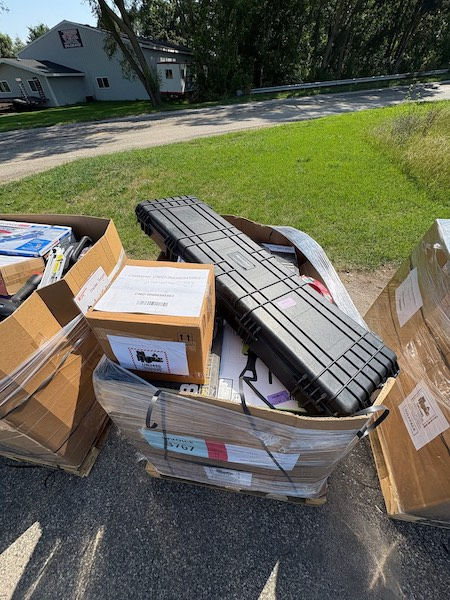
Liquidation Land gives West Michigan shoppers and pallet buyers access to merchandise that has moved outside the traditional retail supply chain. Depending on what becomes available, liquidation inventory can include customer returns, overstock, closeouts and other merchandise.
That different path through the supply chain can create opportunities for shoppers to find products at prices that may be substantially different from their original retail prices.
But there is a trade-off.
Liquidation inventory changes constantly, which means the experience isn't quite like walking into a traditional store where the same products are expected to remain on the shelf week after week.
For many bargain hunters, that's exactly what makes it fun.
Where Does Liquidation Merchandise Come From?
To understand liquidation pricing, it helps to first understand the enormous scale of American retail.
The U.S. Census Bureau tracks hundreds of billions of dollars in retail activity every month. With that much merchandise moving through stores, warehouses and online marketplaces, some products inevitably end up outside the traditional retail cycle.
One of the largest sources is customer returns.
According to the National Retail Federation's 2025 Retail Returns Landscape, retailers expected approximately $849.9 billion in merchandise to be returned during 2025, representing an estimated 15.8% of annual retail sales.
That doesn't mean $849.9 billion worth of products became liquidation merchandise. Many returns are placed back into regular inventory and sold normally.
But others aren't.
Retailers have to determine what makes financial sense for every piece of merchandise that comes back.
Products may need to be inspected, transported, repackaged, refurbished or redirected through another sales channel. At a certain point, moving inventory out of the primary retail system can make more sense than trying to return every item to a traditional store shelf.
And returns are only one piece of the liquidation market.
Liquidation Merchandise Isn't Just Customer Returns
One of the biggest misconceptions about liquidation shopping is that everything came from somebody else's return.
It didn't.
Liquidation merchandise can reach the secondary market for many different reasons.
Overstock and Excess Inventory
Retailers have to predict what customers will purchase long before every sale actually happens.
Sometimes those predictions are remarkably accurate.
Sometimes they aren't.
A retailer might order 20,000 units of a product and discover demand only supports 15,000. Those remaining products still occupy warehouse space and tie up capital that could be used for newer inventory.
Moving excess merchandise through secondary channels can help retailers recover value while freeing space for products they currently want to sell.
Customer Returns
Returns are another major source of secondary-market merchandise, but even the word "return" covers an enormous range of possibilities.
A product might have been returned because:
The customer ordered the wrong size or model
The item wasn't what the customer expected
The packaging was opened or damaged
The buyer changed their mind
A replacement was purchased instead
The item had a cosmetic issue
The product had an actual defect
That's why shoppers should never assume that every returned product has the same condition.
Some merchandise may appear nearly untouched. Other items may show obvious use, packaging damage, missing components or functional problems.
Understanding that variability is an important part of shopping liquidation merchandise wisely.
Closeouts and Discontinued Products
Retailers regularly change what they sell.
A manufacturer releases a new model. Packaging gets redesigned. A retailer stops carrying a particular brand. A product line gets discontinued. A store resets an entire department.
None of those events automatically makes the older merchandise useless.
It may simply mean the retailer no longer wants that inventory occupying valuable space.
Liquidation provides another potential path for those products.
Seasonal and Changing Inventory
Retail is also heavily influenced by seasons and selling cycles.
Once a particular selling period ends, retailers often need to make room for whatever comes next.
The calendar keeps moving even when merchandise remains.
That creates another reason perfectly usable products can leave their original retail environment and enter secondary channels.
📊 Core Fusion Insight
"Liquidation" describes how merchandise is being sold, not one universal condition of merchandise.
An overstock item that never reached a consumer and a customer-returned item with damaged packaging could both enter the liquidation market, but they may have very different histories and conditions.
That is why understanding what you're buying matters just as much as finding a low price.
What Is Reverse Logistics?
Behind much of the liquidation industry is a larger system known as reverse logistics.
Traditional logistics moves merchandise toward the customer.
Reverse logistics deals with products moving in the other direction or finding a new destination after their original distribution or sale.
The National Retail Federation explains reverse logistics as the activities that occur after a product's initial sale or distribution. That can include returns as well as recovering value from unsold and excess inventory.
Depending on the merchandise, products moving through reverse logistics may eventually be:
Returned to regular inventory
Refurbished
Resold through another channel
Liquidated
Donated
Recycled
Otherwise recovered or disposed of
For retailers handling merchandise at enormous scale, figuring out what to do with those products is an important business decision.
For bargain shoppers, the result can be opportunity.
Why Can Liquidation Stores Sell Merchandise for Less?
Here's where everything starts coming together.
When a retailer originally purchases merchandise, the goal is generally to sell that product through its normal retail channel at a price that supports the retailer's business.
Once that product becomes excess inventory, a return, a closeout or merchandise the retailer otherwise wants to move, the economic calculation changes.
The retailer may now care more about recovering some value, reducing handling costs and clearing inventory than holding onto the merchandise indefinitely in hopes of receiving the original selling price.
Liquidation buyers can purchase merchandise through these secondary channels.
That creates a different cost structure from traditional retail and can create opportunities for lower resale prices.
This doesn't mean every liquidation item will automatically be the lowest price available anywhere.
Smart bargain shopping still means evaluating the product, its condition and the price.
But the liquidation supply chain helps explain how products that once moved through major retail channels can eventually appear in a completely different shopping environment.
Why Don't Major Retailers Just Keep Everything Until It Sells?
Because inventory has a cost even when nobody is buying it.
Products take up physical space.
Warehouses have finite capacity. Retail stores have limited shelf space. Merchandise has to be handled, organized, tracked and moved. Meanwhile, new products continue arriving.
Holding onto slow-moving merchandise indefinitely can prevent retailers from using that space for inventory they believe will sell more quickly.
There is also an opportunity cost.
Money tied up in old inventory cannot simultaneously be invested in different inventory.
For a large retailer managing thousands or millions of products, efficiently moving unwanted merchandise can therefore be more valuable than waiting indefinitely for every product to sell at its original price.
📊 Core Fusion Insight
The original retail price and the liquidation value answer two different questions.
Retail pricing asks what a product can sell for through the retailer's normal sales channel.
Liquidation pricing reflects what that merchandise is worth in a different stage of its lifecycle, where moving inventory and recovering value can become more important.
That difference is one reason liquidation shopping exists.
Why Liquidation Shopping Feels Like a Treasure Hunt
All of this creates a shopping experience that is fundamentally different from traditional retail.
If you visit a conventional store looking for a specific product, you generally expect that retailer to reorder the item when inventory gets low.
Liquidation inventory doesn't necessarily work that way.
The merchandise available depends heavily on what enters the secondary market and what Liquidation Land is able to acquire.
Something available during one visit may be gone during the next.
At the same time, the next shipment could introduce products you weren't expecting to find at all.
That constantly changing selection is why liquidation shopping often attracts people who genuinely enjoy the hunt.
You might walk in looking for one thing and discover something completely different that makes sense for your home, family, rental property, business or resale operation.
We explored that experience more deeply in What Can You Find at Liquidation Land? A Treasure Hunt for West Michigan Bargain Shoppers.
The important thing to remember is that liquidation shopping rewards a slightly different mindset.
Instead of asking only:
"Does this store have the exact product I already decided to buy?"
It can also be worth asking:
"What useful deal might I discover today?"
For bargain hunters around Grand Rapids, Grandville and communities throughout West Michigan, that unpredictability can turn an ordinary shopping trip into something much more interesting.
And knowing why liquidation merchandise can cost less is only half of becoming a smarter liquidation shopper.
The next step is knowing how to determine whether the deal in front of you is actually a good one.
How Do You Know If a Liquidation Item Is Actually a Good Deal?
A low price can get your attention, but price alone doesn't determine whether something is a good buy.
The better question is:
What am I getting for the amount I'm paying?
When you're shopping liquidation merchandise, consider the item's condition, completeness, usefulness and comparable retail price before deciding whether the savings make sense for you.
A product that originally sold for $300 isn't automatically a great deal simply because its current price is much lower.
If important components are missing or the item doesn't work for what you need, even a very low price might not represent good value.
On the other hand, cosmetic packaging damage may matter very little if you're buying something for your own household and the product itself meets your needs.
That's where smart liquidation shopping begins.
Check the Condition, Not Just the Box
Packaging can tell you something about a product, but it doesn't always tell you everything.
Liquidation merchandise can come through several different channels, so shoppers may encounter products in varying conditions.
Before buying, look at what you can reasonably determine about the item.
Look at the Packaging
Is the original packaging intact?
Has the box been opened?
Does it appear to have been resealed?
Is there visible shipping or packaging damage?
An imperfect box does not necessarily mean the product inside is damaged, just as an attractive box doesn't guarantee that everything inside is perfect.
Treat packaging as one piece of information rather than the entire story.
Check for Missing Components
Some products are only useful when all of their essential components are included.
Depending on the item, that might include:
Power cords
Chargers
Remotes
Mounting hardware
Accessories
Instruction materials
Proprietary parts
Before purchasing an item, consider whether anything appears to be missing and, more importantly, whether a missing component would affect your ability to use it.
A bargain can become less attractive if replacing one specialized part costs almost as much as the product itself.
Think About Cosmetic Damage Differently
Not every imperfection affects usefulness.
A scratched exterior, damaged package or small cosmetic flaw may be important if you're purchasing something as a gift or planning to resell it as new.
If you're buying the same product for your garage, basement, rental property or personal use, that imperfection might matter far less.
This is one of the advantages of approaching liquidation merchandise based on value
rather than perfection.
📊 Core Fusion Insight
The smartest liquidation shoppers don't simply ask, "How much cheaper is this?"
They ask, "Does the condition of this particular item justify the price I'm paying?"
That small change in thinking makes it much easier to separate an exciting price tag from a genuinely useful bargain.
Compare Prices Before Assuming You've Found a Bargain
Liquidation can create substantial savings opportunities, but shoppers should still compare.
Your phone is one of the most useful tools you can bring bargain shopping.
If you recognize a specific brand and model, search for its current selling price elsewhere. Pay attention to whether you're comparing the same model, size, generation and condition.
An older version of a product may have originally carried a high manufacturer's suggested retail price but sell for much less today because a newer model has replaced it.
Likewise, an item may appear heavily discounted compared with its original price while currently being offered on sale through traditional retailers.
The goal isn't to prove that every liquidation product is cheaper than every alternative.
The goal is to identify situations where the current price, condition and usefulness
combine to create good value for you.
That makes the comparison much more meaningful.
Liquidation Shopping Works Best When You Stay Flexible
Traditional retail is often about finding an exact product.
Liquidation shopping can be more rewarding when you shop for a solution.
Suppose you need a small appliance for your kitchen.
At a traditional retailer, you might research one exact brand, color and model before entering the store.
At a liquidation store, a better approach may be deciding which features actually matter to you and then seeing what's available.
You might discover a different brand or model that accomplishes exactly what you need at a price you hadn't expected.
The same principle can apply to home goods, electronics, tools, baby products, household merchandise and many other categories that may appear through liquidation channels.
Inventory changes, so flexibility gives you more opportunities to recognize value when you see it.
Why Liquidation Shopping Can Make Sense for West Michigan Households
Price-conscious shopping isn't limited to people experiencing financial hardship.
Consumers at many income levels look for value.
The National Retail Federation's analysis of its 2026 Hot 25 Retailers highlighted affordability as an important factor behind the growth of several retailers and noted that deal-seeking behavior extends into higher-income households as well.
That makes sense.
Paying more than necessary for something doesn't automatically make the product better.
For households throughout Grand Rapids, Grandville, Wyoming, Kentwood, Jenison, Hudsonville, Byron Center and the surrounding West Michigan area, liquidation shopping offers another option alongside traditional stores and online marketplaces.
Someone furnishing a first apartment may have very different needs from a homeowner upgrading a room.
A landlord preparing a rental property may prioritize durability and price.
Parents may be watching for useful household or family products.
A DIYer might recognize value in an item another shopper walks right past.
The merchandise doesn't have to serve the same purpose for everyone.
That's part of what makes liquidation retail different.
When Does Traditional Retail Make More Sense?
Liquidation shopping isn't necessarily the best solution for every purchase.
Sometimes traditional retail offers advantages that matter more than price.
For example, conventional retail may make more sense when you need:
One exact model, size or color
Guaranteed access to matching quantities
A product immediately and cannot wait for changing inventory
A particular manufacturer's configuration
A highly predictable purchasing experience
There is no reason bargain shopping has to be all or nothing.
Smart consumers can use different retail channels for different needs.
The advantage of knowing about liquidation is simply having another option.
📊 Core Fusion Insight
Liquidation shopping doesn't need to replace traditional shopping to save you money.
Even finding a few household purchases through liquidation channels over the course of a year can change what you spend on those particular items.
The opportunity comes from knowing when flexibility is worth exchanging for potential savings.
Shopping for Yourself and Buying for Resale Are Two Different Strategies
Liquidation Land serves more than one type of customer.
Someone looking for a deal for their own household evaluates merchandise differently from someone purchasing inventory to resell.
A household shopper might see a small cosmetic flaw and think:
"I don't care. It's going in my basement."
A reseller has additional questions.
Can I sell it?
What price is realistic?
What fees will I pay?
Will I need to ship it?
How long might it take to sell?
What happens if it doesn't work?
Those costs matter because revenue and profit are not the same thing.
If you're interested in liquidation specifically as a business opportunity, our guide to The 10 Most Profitable Items to Look for in Liquidation Pallets explains some of the characteristics resellers can consider when evaluating potential inventory.
And once you've purchased merchandise, How to Price Liquidation Pallet Items for Faster Sales and Better Profits in 2026 takes the next step by examining pricing strategy.
The important distinction is that a fantastic personal-use bargain isn't automatically a profitable resale item, and a strong resale opportunity might not be something you would ever purchase for your own household.
Individual Items or Liquidation Pallets?
This is another important distinction.
You don't necessarily have to buy an entire pallet to participate in liquidation shopping.
Liquidation Land serves shoppers looking for individual merchandise as well as buyers interested in larger liquidation opportunities.
Individual Merchandise Makes Sense When You Are Shopping for Yourself
If you're furnishing your home, looking for something useful or simply enjoy bargain hunting, individual items allow you to evaluate purchases based on your own needs.
You're not trying to calculate the potential return of an entire load.
You're asking a much simpler question:
Would I rather own this product than keep the money it costs?
If the answer is yes and you've evaluated the item's condition and price, you've found something worth considering.
Pallets Require a Different Mindset
Pallet buyers are usually evaluating merchandise at a larger scale.
Instead of asking whether one item is worth buying, they may need to evaluate the overall mix, condition, potential resale value, selling costs and risk associated with the merchandise.
That can create opportunities for side hustlers and established resellers, but it also requires more planning.
No pallet guarantees a particular profit.
Successful resale depends on what was purchased, what can actually be sold, the prices buyers are willing to pay, selling expenses, labor, returns and other costs.
That is why responsible pallet buying should be treated like a business decision rather than a guaranteed shortcut to income.
The Best Liquidation Shoppers Learn What Matters to Them
There isn't one perfect strategy for everyone who walks into Liquidation Land.
Some shoppers love searching for the biggest percentage discount they can find.
Others care more about practical household products.
Some enjoy discovering products they never would have considered purchasing at full retail.
Resellers may walk through the same merchandise thinking about demand, margins and sales channels.
What matters is understanding your reason for shopping.
Before buying something simply because the price looks exciting, ask:
Do I need it?
Will I use it?
Do I understand its condition?
Have I compared the price?
Would I still think this was a good purchase tomorrow?
Those questions are simple, but they can make liquidation shopping much more effective.
Why Liquidation Land Is Different From a Predictable Retail Trip
A traditional shopping trip is usually built around certainty.
You know what the retailer carries. You search the website. You check whether the product is in stock. You go buy it.
Liquidation shopping adds discovery back into the experience.
Because merchandise moves through changing secondary-market channels, the inventory itself can become part of the reason to visit.
You may find something useful.
You may discover a product you hadn't considered.
You may spot a bargain that makes sense immediately.
Or you may decide today's selection doesn't contain what you're looking for and check again another time.
That's the nature of changing inventory.
And it is why we avoid telling shoppers that a particular product will always be waiting for them at Liquidation Land.
Liquidation inventory changes.
The better reason to visit is to see what's available now.
A Different Way to Shop West Michigan
At its core, liquidation retail gives merchandise another opportunity to find a buyer.
For retailers, secondary markets can help recover value from products that no longer make sense in their traditional sales channels.
For resellers, liquidation can provide inventory opportunities that may support a resale business when purchased and managed carefully.
And for everyday shoppers, it creates something much simpler:
another place to look before paying traditional retail prices.
That's what makes Liquidation Land relevant to more than professional pallet buyers.
You don't need a warehouse.
You don't need an online resale store.
You don't need to understand the entire reverse-logistics industry.
You can simply enjoy finding useful merchandise at a price that makes sense for you.
For shoppers around Grand Rapids and throughout West Michigan, that can make Liquidation Land worth adding to the places you check when you're looking for value.
See What You Can Find at Liquidation Land
The merchandise that enters the liquidation market changes, and so does the opportunity.
That's why the best way to understand Liquidation Land isn't to think of it as a store where you're guaranteed to find one specific item every time.
Think of it as a place where the inventory itself is part of the experience.
Some visits may be about finding something you already needed.
Others may produce the kind of unexpected bargain you tell someone about later.
And if you're a reseller or pallet buyer, you may be looking at the same merchandise through an entirely different lens.
Either way, the strategy starts the same:
Know what you're buying. Check the condition. Compare the value. And be ready for the inventory to change.
Visit Liquidation Land to learn more, explore available liquidation opportunities and plan your next visit.
Because with liquidation merchandise, the deal you find today may not be the deal waiting for you next time.
Frequently Asked Questions About Liquidation Merchandise
Why is liquidation merchandise cheaper than regular retail merchandise?
Liquidation merchandise can cost less because it has moved outside a retailer's normal sales channel. Products may enter the secondary market because of customer returns, excess inventory, closeouts, discontinued product lines, packaging changes or other inventory decisions.
At that stage, recovering value and moving merchandise efficiently may become more important to the original retailer than selling every product at its original retail price. That creates opportunities for liquidation businesses to acquire merchandise through secondary channels and offer it to shoppers or pallet buyers.
Does liquidation mean the merchandise is damaged?
No. "Liquidation" does not describe one specific product condition.
Liquidation inventory can include overstock, closeouts, customer returns and other merchandise. Some products may be unused, while others may have damaged packaging, cosmetic imperfections, missing components or functional issues.
Because condition can vary, shoppers should evaluate individual products rather than assuming everything sold through liquidation is either perfect or damaged.
Is liquidation merchandise the same as used merchandise?
Not necessarily.
Some liquidation products may have been opened or used before being returned, while others may be excess inventory or merchandise that never reached a consumer.
The source and condition of liquidation merchandise can vary considerably, which is why understanding what you're purchasing is important.
Can anyone shop at Liquidation Land, or is it only for resellers?
Liquidation Land isn't only for professional resellers.
Everyday bargain hunters, homeowners, families, landlords and other shoppers can look for individual merchandise, while resellers and side hustlers may be more interested in pallets or larger inventory opportunities.
The right buying strategy depends on what you plan to do with the merchandise.
Can you buy individual items at Liquidation Land?
Liquidation Land serves shoppers interested in individual merchandise as well as buyers looking for liquidation pallets and larger purchasing opportunities.
Because liquidation inventory changes, shoppers should not assume that a specific product or category will always be available.
What should I check before buying liquidation merchandise?
Start by considering the item's condition, completeness, current market price and usefulness to you.
Look for missing accessories or components when applicable, examine visible packaging or product damage, and compare the price with current alternatives when possible.
If you're purchasing merchandise for resale, also consider potential selling fees, shipping expenses, labor, returns and other costs before estimating potential profit.
Does Liquidation Land have the same inventory every week?
Liquidation inventory can change frequently because availability depends on merchandise entering secondary-market channels and what Liquidation Land is able to acquire.
That means something available during one visit may not be available later, while future inventory may include products you weren't expecting to find.
For many bargain hunters, that changing selection is part of the treasure-hunt experience.
Is buying a liquidation pallet guaranteed to be profitable?
No.
A liquidation pallet can provide inventory for a resale business, but profitability depends on factors including acquisition cost, merchandise condition, actual resale demand, selling prices, platform fees, shipping, labor, returns and unsold inventory.
Revenue is also different from profit. Resellers should evaluate the complete cost of purchasing and selling merchandise rather than relying only on estimated retail values.
External Sources & References
The following authoritative resources support the retail, returns and reverse-logistics information discussed in this article:
Provides official U.S. government data on retail and food-service activity and helps establish the scale of merchandise moving through the American retail economy.
Provides retail-return research, including the estimated value and percentage of merchandise expected to be returned during 2025.
Provides additional context about reverse logistics, returns, unsold inventory and the processes businesses use to recover value from merchandise.
Provides 2026 retail context surrounding affordability, value-oriented shopping and consumer deal-seeking behavior.
Continue Exploring Liquidation Land
Want to learn more before your next visit?
See why changing inventory makes liquidation shopping different from a typical trip to a traditional retailer.
Considering liquidation merchandise for resale? Learn what characteristics can make certain products more attractive to resellers and why potential selling price alone doesn't determine profitability.
Already selling liquidation merchandise? Explore practical considerations for setting prices while accounting for demand, competition and the difference between revenue and actual profit.
Visit Liquidation Land
Whether you're searching for bargains for your home, exploring a side hustle or buying merchandise for an established resale business, liquidation gives you another way to shop.
The selection can change, so every visit can be different.
Visit Liquidation Land online to learn more and see what opportunities are available.
Shop smart. Compare value. And enjoy the hunt.

Comments